
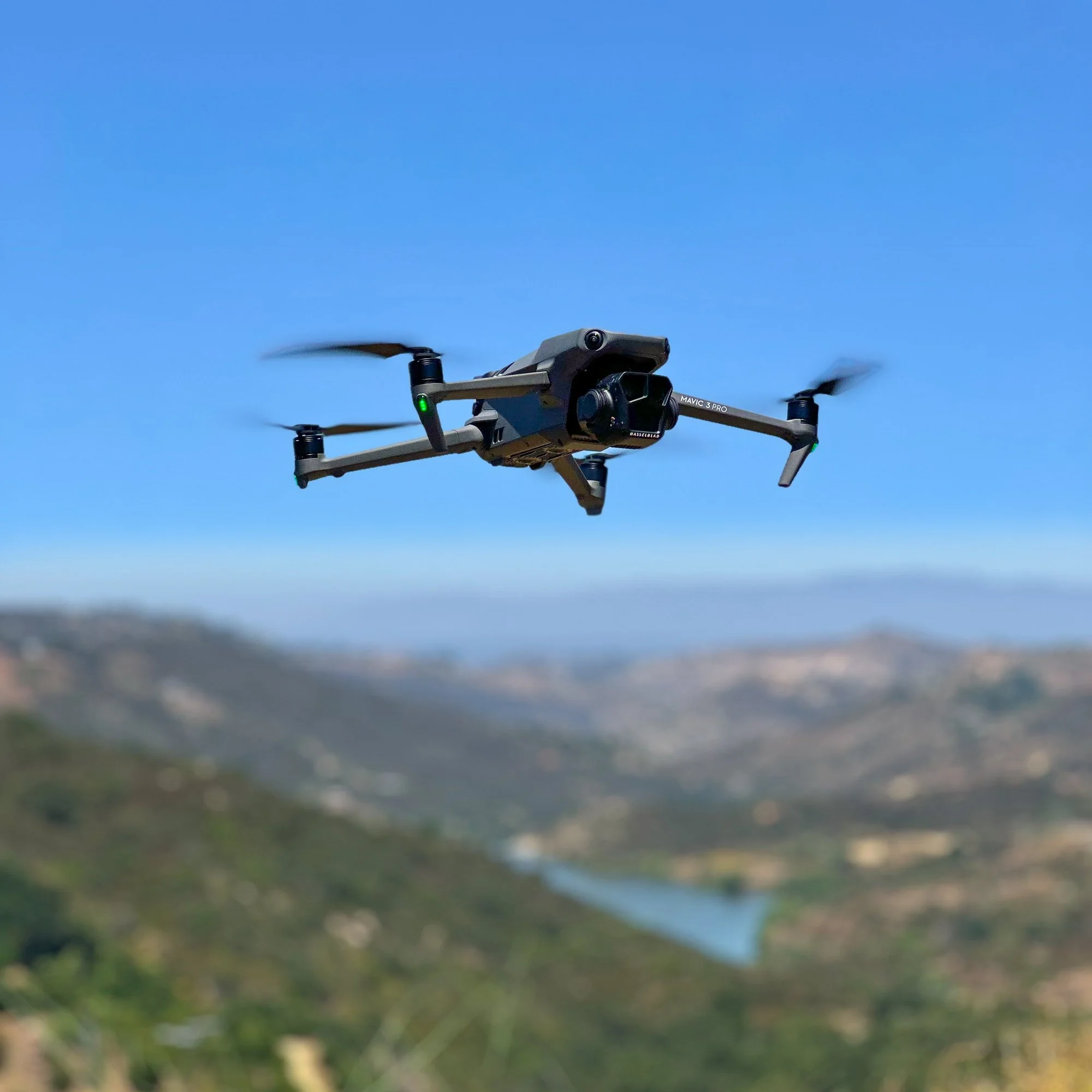
Drone imagery has become an essential part of modern marketing for real estate, architecture, design, construction, and hospitality. It provides context, scale, and perspective that ground-based photography simply can’t. Over the past decade, drones have gone from a novelty to an expected deliverable.
But the landscape for drone photography in the U.S. is changing.
Recent federal actions targeting DJI, the world’s most widely used drone manufacturer, have introduced new uncertainty around equipment availability, replacement costs, and long-term access to professional-grade drones. While existing drones aren’t suddenly grounded, the ripple effects of these changes matter — both for operators and for clients who rely on aerial imagery.
WHAT’S ACTUALLY HAPPENING WITH DJI IN THE U.S.
In late 2025, the Federal Communications Commission (FCC) updated its “Covered List” to include DJI and certain foreign-made drone technologies based on national security determinations. The practical outcome of this decision is that new DJI drone models can no longer receive FCC authorization, which is required to legally import and sell wireless devices in the United States.
This is not a recall, and it is not an immediate ban on flying existing drones. Instead, it directly affects future availability.
In simple terms:
Existing, legally purchased DJI drones still function
New DJI drones face significant barriers to entering the U.S. market
Long-term replacement and upgrade paths are now uncertain
That distinction is important — and often misunderstood.
WHAT THIS DOES NOT MEAN
Let’s clear up a few misconceptions right away.
DJI drones are not being remotely disabled
Current operators are not being forced to stop flying
Client usage of completed photos and videos is not affected
This is not about restricting imagery or marketing assets. It’s about equipment authorization and future supply, not retroactive enforcement.
WHAT THIS MEANS FOR DRONE OPERATORS
For professional drone operators, equipment replacement is a normal and unavoidable part of doing business.
Drones crash. Batteries degrade. Airframes age out. Sensors improve. Redundancy matters. Until now, replacing or upgrading DJI equipment has been relatively straightforward.
That is changing.
The key impacts for operators:
Fewer new DJI drones entering the U.S. market
Increased demand for existing and used equipment
Higher costs to replace damaged or retired gear
More capital tied up in maintaining compliant, reliable systems
When replacement becomes harder and more expensive, operating professionally becomes more costly — especially for operators who maintain backups, insurance, and redundancy to protect clients from disruption.
WHAT THIS MEANS FOR PRICING (FROM THE CLIENT SIDE)
This is the part clients need to understand, and it’s not about opportunistic price hikes.
Drone service pricing has always reflected more than flight time. It includes equipment investment, maintenance, insurance, licensing, compliance, and risk management.
When professional-grade equipment becomes:
harder to source
more expensive to replace
and less predictable long-term
those costs don’t disappear. They get absorbed into the cost of doing business.
Over time, drone photography services are likely to increase in price, not because demand has changed, but because the infrastructure behind the service has.
This is no different than rising costs in construction materials, camera systems, lighting equipment, or insurance. When the tools become more difficult to replace, the service that depends on them becomes more valuable.
WHY THIS ACTUALLY BENEFITS CLIENTS LONG-TERM
While no one enjoys higher costs, there is an important upside.
As barriers to entry rise, the market naturally filters itself.
Operators who:
are unlicensed
uninsured
non-compliant
or unwilling to invest in proper equipment
will struggle to operate sustainably.
What remains are professionals who treat drone work as a regulated, legitimate service — not a side hustle. For clients, this means fewer legal risks, more consistent delivery, and a higher level of professionalism across the board.
WHY PART 107 MATTERS MORE THAN EVER
This shift also makes FAA compliance more important, not less.
A Part 107 certificate is required for all commercial drone operations in the U.S. It establishes that the operator understands airspace rules, safety requirements, and operational limitations.
As drones become more regulated, more scrutinized, and more expensive to operate, having a properly licensed Part 107 operator becomes a critical layer of protection — for both the operator and the client.
From a client perspective, hiring a licensed drone pilot isn’t just about legality. It’s about reducing liability, avoiding project disruptions, and ensuring your imagery was captured responsibly and professionally.
WHAT THIS MEANS FOR CLIENT END USE
From a usage standpoint, very little changes.
The photos and video you receive can still be used for:
websites
social media
print marketing
listings
presentations
publications
The FCC actions affect equipment authorization, not how finished imagery can be used or distributed.
The bigger impact is behind the scenes: availability, continuity, and reliability.
As equipment replacement becomes more difficult, working with an experienced, well-equipped operator becomes the safest way to ensure consistent results.
HOW I’M APPROACHING THIS
From my perspective, the goal is simple: clients should never feel the turbulence.
That means:
maintaining reliable, compliant equipment
building redundancy where possible
staying current on licensing and regulations
and planning proactively rather than reacting later
The focus remains on delivering clean, consistent aerial imagery that supports the story of the project — regardless of what’s happening behind the scenes.
THE BOTTOM LINE
The situation with DJI represents a real shift in the U.S. drone landscape. It doesn’t ground existing drones today, but it does disrupt future availability and replacement cycles.
For operators, that means higher costs and tighter logistics.
For clients, it reinforces the value of working with licensed, insured professionals who are positioned to adapt without disruption.
Drone photography isn’t going away. But it is becoming more specialized, more regulated, and more valuable when done correctly.
©SandKasl Imaging